
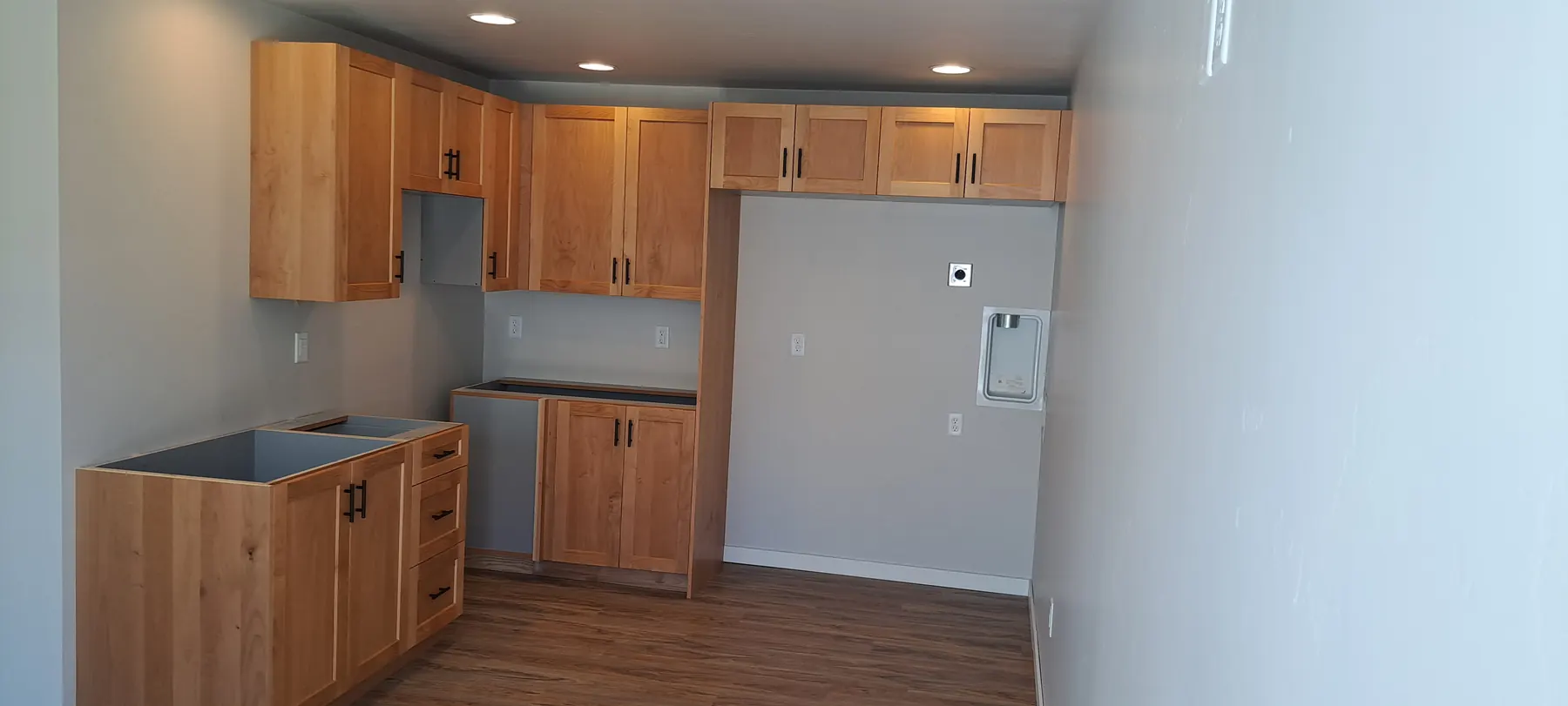
How to plan cabinets for a combined laundry and mudroom, including hampers, bench storage, cleaning supplies, utility zones, and daily drop areas.
Separating Laundry Storage From Entry Storage
Many Treasure Valley homes ask one room to handle laundry, shoes, coats, cleaning supplies, pet items, and everyday household overflow. A custom cabinet project should begin with the way the room is used, not with a generic cabinet size or a showroom layout. The best results come from matching storage, clearances, finish choices, and daily routines before anything is built.
For Treasure Valley homeowners, that often means planning around real life: groceries coming in from the garage, kids dropping bags near an entry, small appliances taking over counters, paperwork collecting in an office, or bathroom supplies crowding a vanity. Custom cabinetry gives those items a better place to land.
Questions to Answer Before the Layout
A stronger cabinet plan starts with a short inventory. What needs to be stored? Which items are used every day? Which items are heavy, seasonal, awkwardly shaped, or better hidden behind doors? Those answers shape the number of drawers, shelf spacing, cabinet depth, hardware, and open display areas.
Laundry room cabinetry should account for appliance clearances, doors, plumbing, dryer venting, and the supplies used in the room. The same planning should account for nearby rooms, walking paths, appliance doors, windows, outlets, lighting, and the visual weight of the finished cabinets.
Where Custom Cabinetry Adds Value
Upper cabinets can keep detergents and cleaning products out of sight while preserving counter or folding space. Stock cabinets can work in simple rooms, but custom work matters when the space has unusual dimensions, a specific storage problem, or a homeowner who wants the cabinetry to look integrated rather than dropped in.
The strongest laundry mudroom layouts separate wet, dirty, clean, and grab-and-go storage so the room can work hard without turning into a single cluttered drop zone. The value is not only appearance. Better cabinet planning can reduce clutter, make cleanup easier, protect frequently used items, and make the room feel calmer because everything has a defined place.
How This Connects to Other Rooms
Cabinet decisions rarely live in only one room. Laundry Room Cabinets may affect nearby pantry storage, mudroom flow, laundry organization, garage storage, entertainment centers, or built-in display areas. Thinking through those connections helps the finished project feel more deliberate.
That is why related services such as mudroom cabinets, garage cabinets, pantry cabinets are worth considering during the same planning conversation. Even if the work is completed in phases, the style and storage logic can still be coordinated.
Getting Ready for a Quote Conversation
The most useful quote conversation includes the room type, photos, rough dimensions, a list of what is not working, and a few notes about preferred finishes or inspiration. Exact decisions do not need to be finalized before reaching out.
Jackson Cabinets can help turn those starting points into a practical plan for laundry room cabinets in Nampa, Boise, Meridian, Caldwell, and communities across Idaho's Treasure Valley.
Ready to Talk Through the Room?
Bring photos, rough measurements, storage goals, and a few inspiration notes. Jackson Cabinets can help turn those details into a cabinet plan for your home.
Request a QuoteRelated Cabinet Services
Local Cabinet Service Pages
Frequently Asked Questions
Can one cabinet layout handle both laundry and mudroom storage?
Yes. A combined room can use upper cabinets, lower cabinets, bench storage, hooks, hampers, utility storage, and closed cabinets to separate different jobs.
What should be stored near the washer and dryer?
Detergent, stain products, cleaning supplies, towels, hampers, folding supplies, and household utility items often work best near the laundry zone.
What should be planned near the entry side of the room?
Shoes, coats, backpacks, sports gear, pet leashes, seasonal items, and everyday bags usually need easy-reach storage near the entry path.